
Case Study · OCELLOS Dashboard
-
Experience Redesign
-
Strategy
Customer Satisfaction
Design Systems
Interaction Design
UX
Web Application
The Prompt
Customer feedback showed general dissatisfaction with the existing design's static home page experience. One particular Trakcel customer wanted to develop a calendar where they could see timely patient details as their daily clinical touchpoint.
Personal Insight
I noticed the team struggling to solution changes to the product that could meet competing and sometimes contradictory wants simultaneously. Development cycles were long, and their customers felt the team was not responsive enough.
Partners
- Chief Product Officer
- Head of Product
- Senior Product Manager
- Staff Software Engineer
The Pitch
A new framework of flexible layouts with 4 initial modules would allow the team to tackle a few different problems simultaneously:
- Enable different views by persona and site location
- Untangle base systems from individual customer personalization
- Create new concepts as MVPs for specific clients
Patients, Tasks, and Shipments would be built using existing data, while the new Calendar would solve the emerging customer request.
Refinement
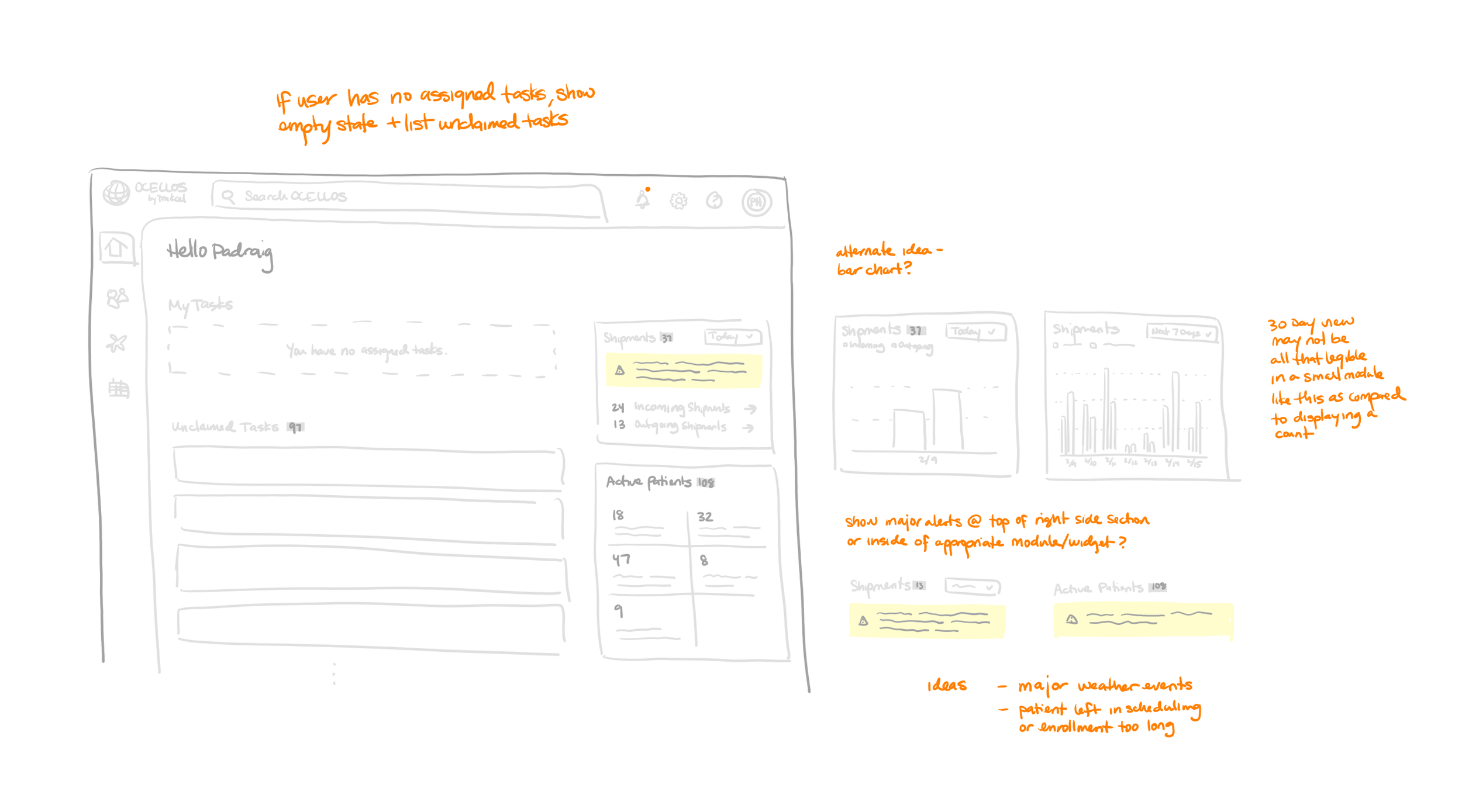
The specific design for each module evolved over rounds of team and customer feedback. Each widget responsively flexed into 4 sizes from full width down to 1/3rd, allowing customers to tweak not just their selection but also highlight specific info.
Design Touchpoints
- Define in low fidelity wireframes, assess feasibility with team
- High fidelity mockups for initial client feedback
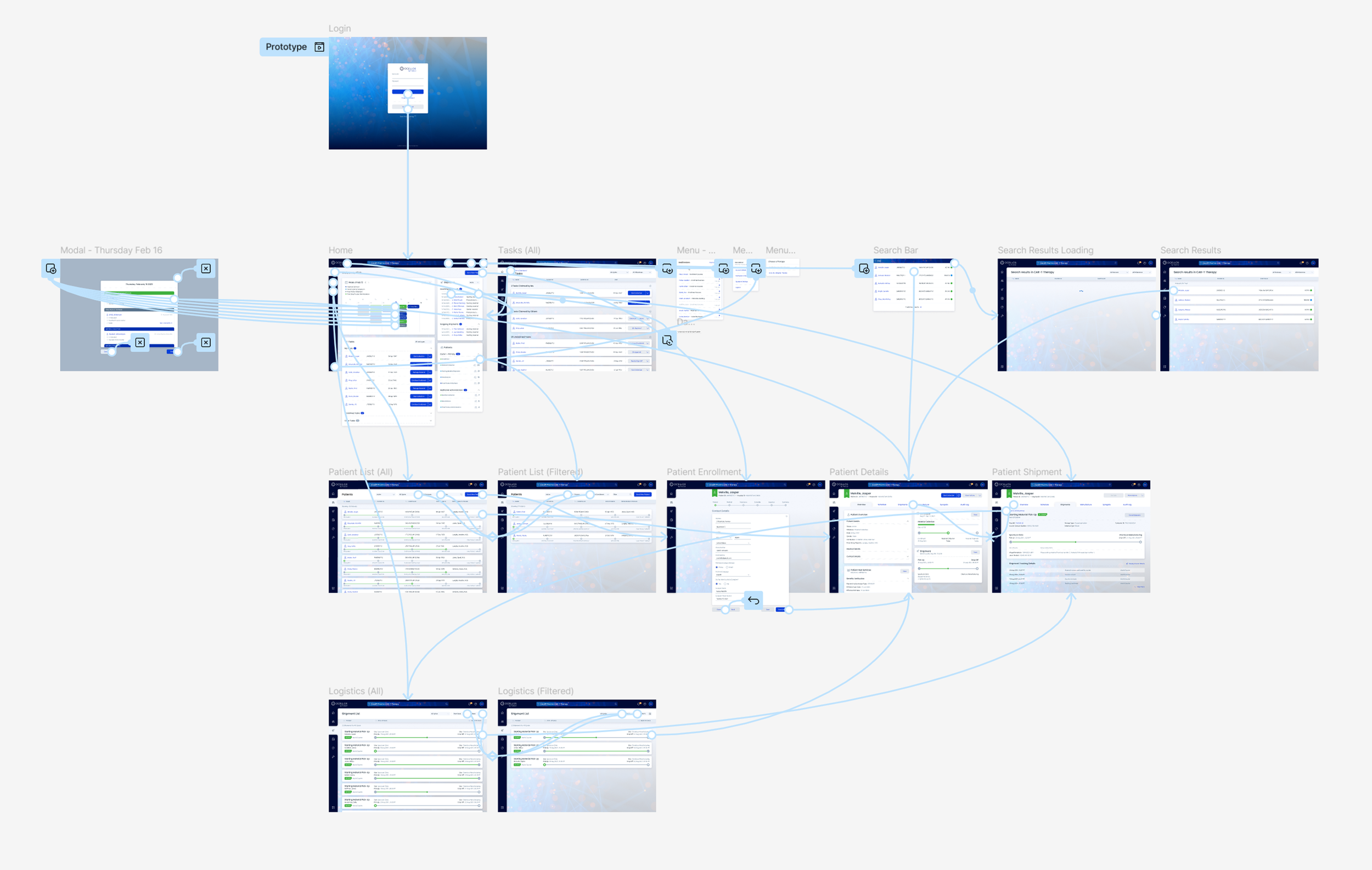
- Interactive demo for major industry event
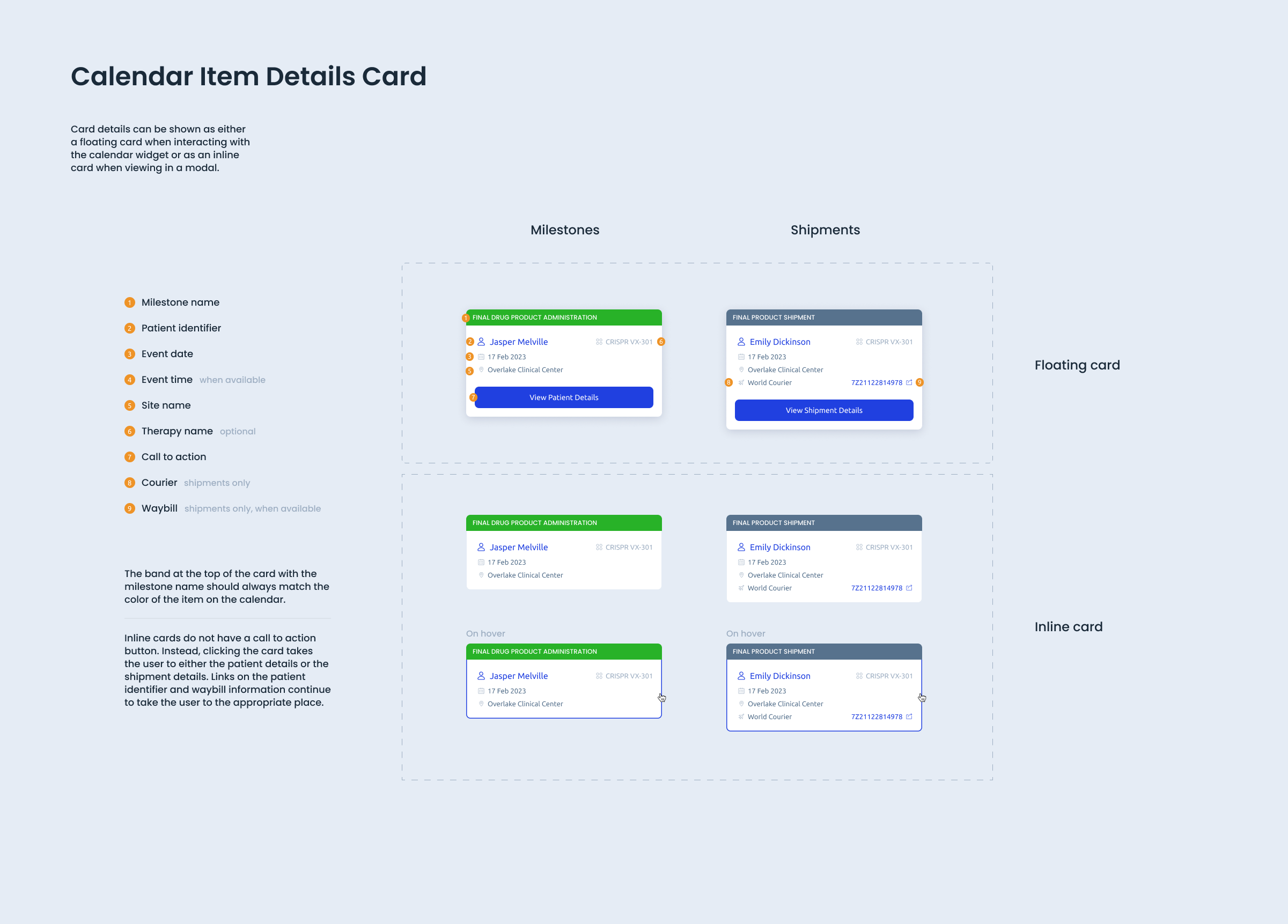
- Design specifications for dev team handoff
- QA with development team during build
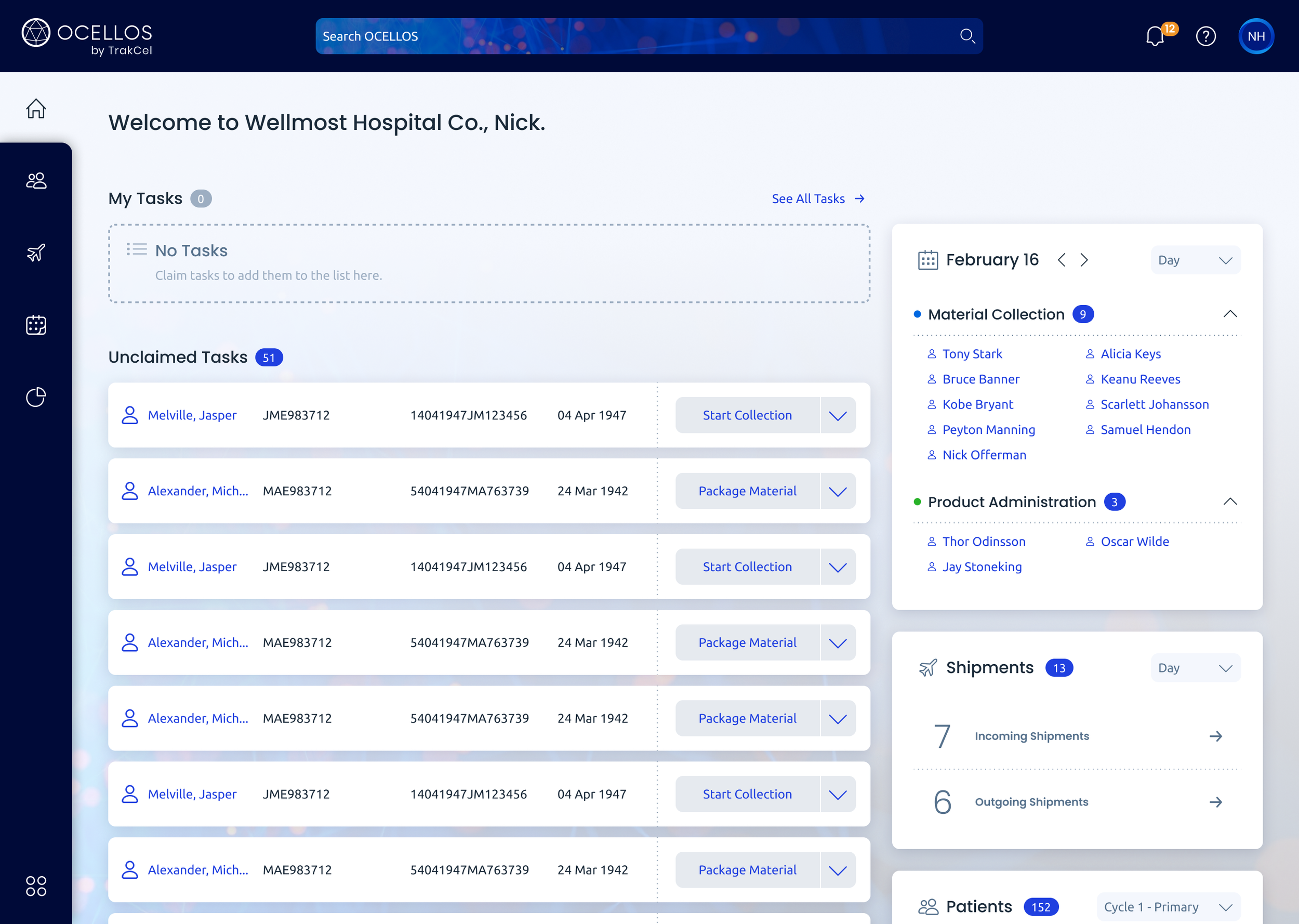
Original home page dashboard design.
Sample dashboard layout for clinical staff highlighting weekly calendar.
Key Improvements
Trackcel customers took immediately to the concept and their mindset towards the home page shifted towards personalization. The team's configuration engineers were able to manage individual customer wants more effectively, making room for the product team to develop new requests.
Dev Team
- Individualized solutions for each customer
- Smaller and more strategic development cycles
Client Relationships
- Satisfaction and collaboration increased
- Clients felt they had more control